Fridge filters vs. Valinor
Your fridge filter is a decent start.
Good at chlorine and taste. Not built for what’s in your water today.
The Materials
Follow the water.
Your fridge filter is made of plastic, held together with plastic, and delivers water through plastic. None is certified for microplastic reduction.
Your fridge filter
Valinor
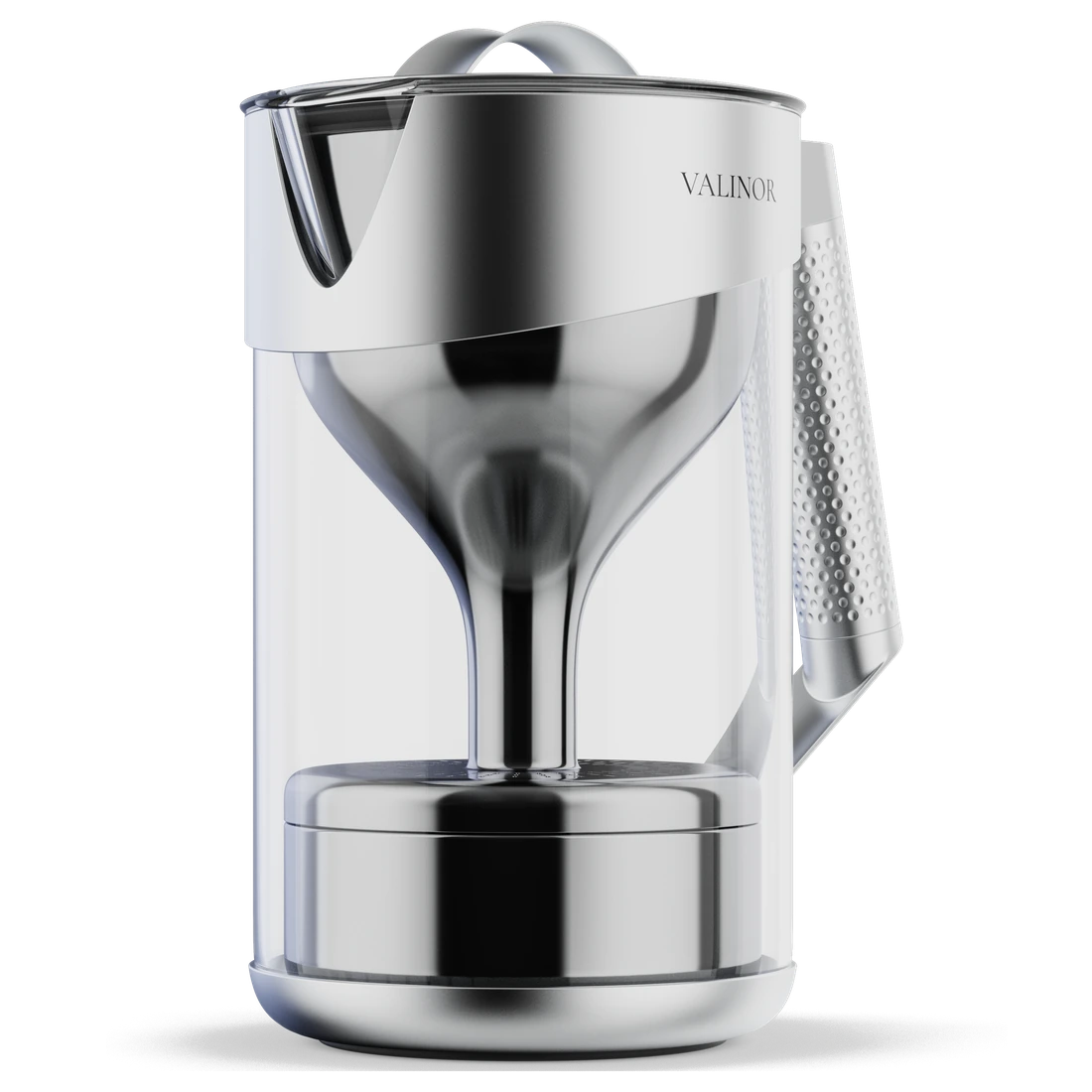
Side by Side
How Valinor compares to the typical fridge filter.
Compared against Samsung’s top-rated filter (HAF-CIN) — the strongest case for a fridge filter. Most aftermarket replacements are certified to NSF/ANSI 42 only — chlorine taste and odor.
| Valinor | Samsung’s top-rated filterSamsung HAF-CIN | |
|---|---|---|
| Contaminants reduced | 75+ | 33 |
| Microplastics | ✓ | × |
| Materials | Glass + stainless steel | Plastic throughout |
Samsung HAF-CIN — Samsung’s top-rated fridge filter — is certified to NSF/ANSI 42, 53, and 401 for 33 contaminants per NSF certification documents (TapWaterData analysis, 2025). Most aftermarket replacements carry NSF 42 only — chlorine taste and odor. Valinor media independently tested to NSF/ANSI 42, 53, and 401 standards; Valinor cartridge testing and IAPMO certification forthcoming.
The Contaminant Gap
75+ vs. 33.
That’s against the strongest case for a fridge filter. Microplastics and broad PFAS beyond PFOA/PFOS sit outside its certified scope.
A saturated filter can leach contaminants back at higher levels than unfiltered tap. Valinor’s subscription delivers a fresh filter every 90 days — replacement is built in, not left to memory.
Samsung HAF-CIN (TapWaterData analysis, 2025) · WQA Consumer Opinion Study · University of Nebraska Extension.
Your fridge filter stops at taste.
Already have a fridge filter? Keep it. Valinor is independently tested to reduce more than 75 contaminants — far beyond NSF/ANSI 42.
Reserve YoursPreorder · $299 · Ships fall 2027
Not ready to reserve? Stay in touch.