Pitchers vs. Valinor
The most popular pitcher filter reduces 5 contaminants. In plastic.
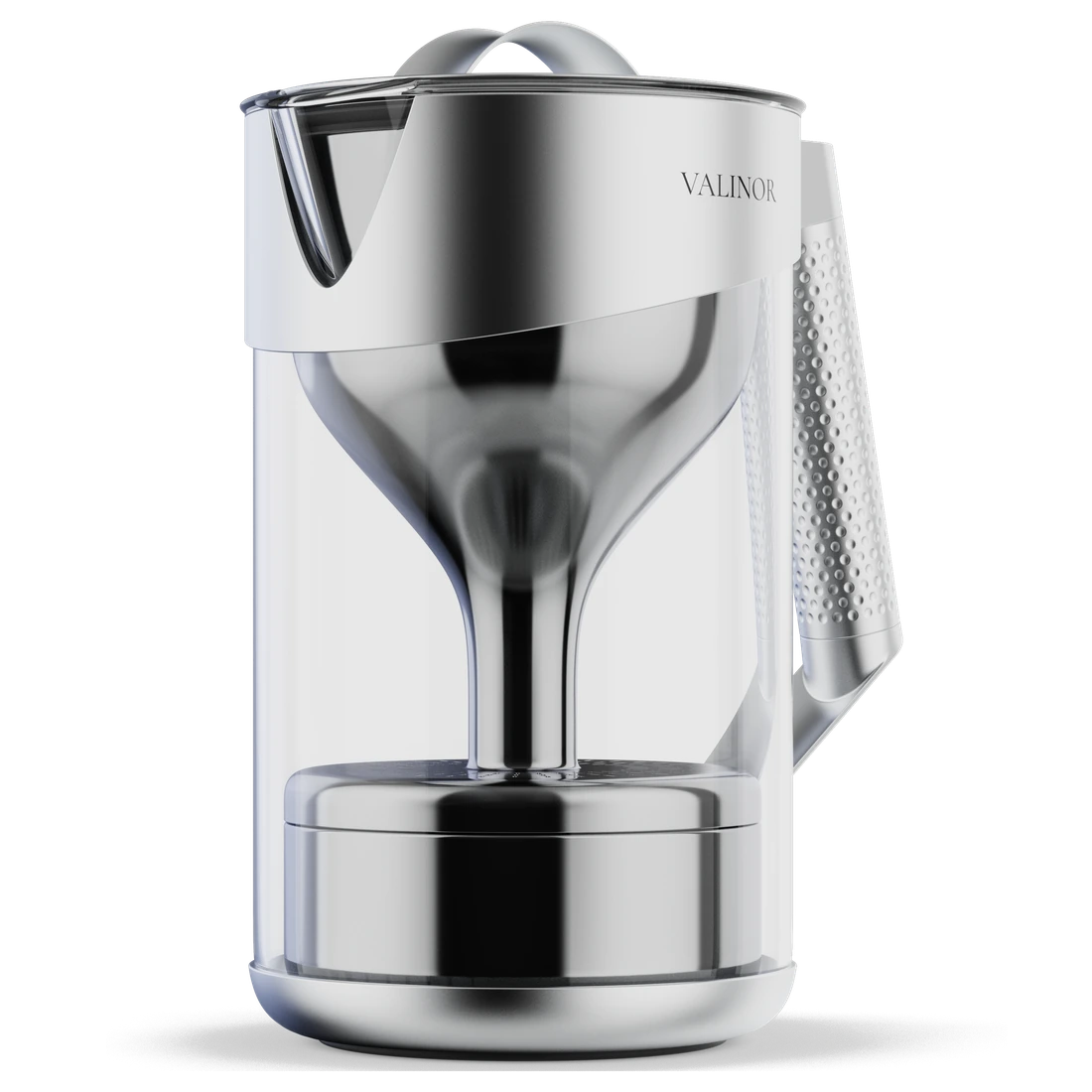
Valinor reduces 75+. In glass and stainless steel.

The materials
Filter the water. Then store it in cheap plastic.
Every mainstream pitcher stores filtered water in plastic until you pour. Filtered water shouldn’t sit in the material the filter is built to capture.
The category
Valinor
Sources: Independent material analysis aggregated by Water Filter Guru. Manufacturer specifications.
Side by Side
How Valinor compares.
Choose any pitcher in the category. See the data.
Contaminant counts are distinct substances on each brand’s current NSF/ANSI Performance Data Sheet, pH/temperature test variants counted once (Brita Elite OB06; PUR PPF951K/PPF900Z; ZeroWater/Culligan). * LARQ claims are based on manufacturer-commissioned lab tests — including tests by a non-ANSI-accredited Chinese lab — not certification; LARQ holds no NSF, IAPMO, or WQA test results. Valinor media independently tested to NSF/ANSI 42, 53, and 401 standards; Valinor cartridge testing and IAPMO R&T certification (75 substances) forthcoming. Other comparison data from manufacturer specifications and independent testing (Water Filter Guru, TapWaterData).
The contaminant gap
75+ vs. 5–15.
Most pitcher filters reduce 5 to 15 contaminants. Valinor reduces 75+, including PFAS, microplastics, lead, disinfection byproducts, and pharmaceuticals.
Competitor counts are certified substances per NSF/ANSI Performance Data Sheets; Valinor media independently tested to NSF/ANSI standards, IAPMO certification forthcoming. Full methodology above.
Better filtration. Better materials.
Better design.
Reserve Yours
Preorder · $299 · Ships fall 2027
60-day satisfaction guarantee · refundable until shipment
Not ready to reserve? Stay in touch.